
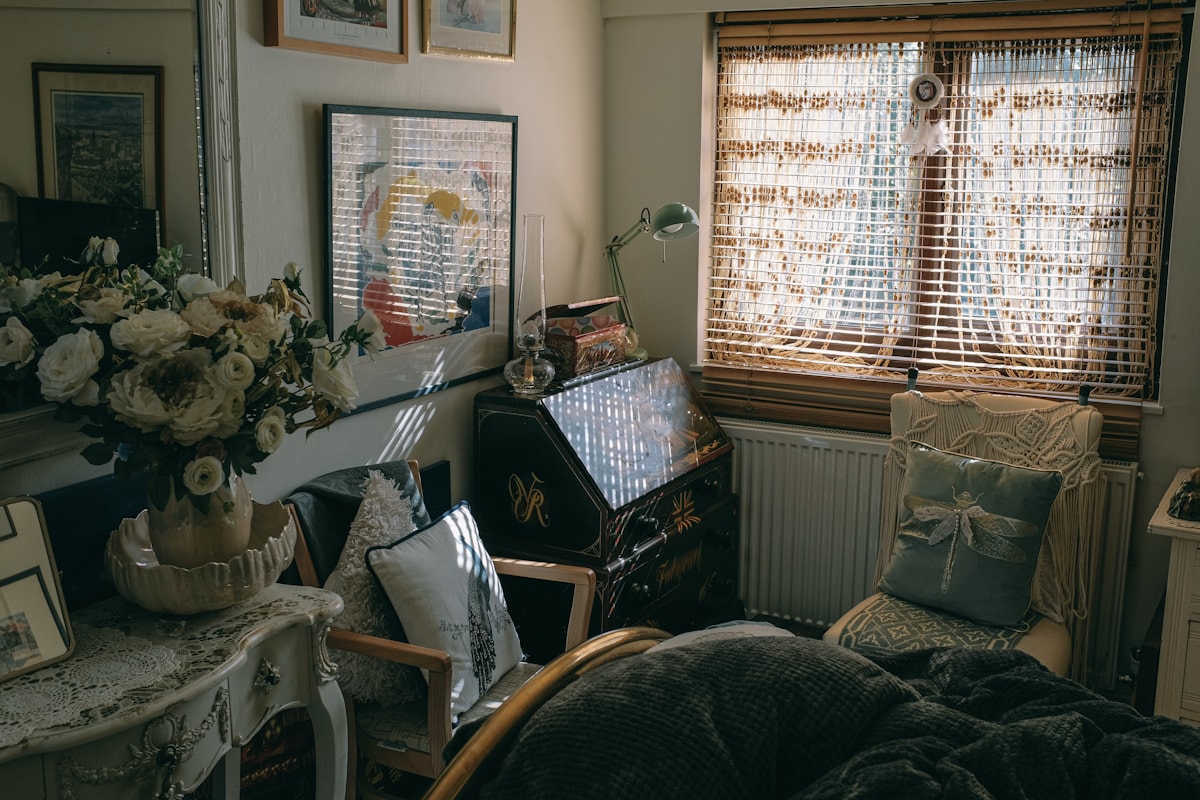
A dark cottagecore room makeover trades cheerful florals for moss, ink, and candlelight. It borrows the cozy heart of dark cottagecore interior design and pours that warmth into one room: walls, textiles, lighting, and a few honest, lived-in objects with a story.
What this style actually means
The look is a deliberate swap from sunlit pastels to shadowed, earthy comfort. You keep the rustic bones (worn wood, soft linens, herbs drying somewhere visible) and push the palette into deep greens, oxblood, charcoal, and warm black. The space should still feel like a real cottage at dusk, not a stage set. Think of it as a familiar bedroom that someone closed the heavy curtains on, lit one beeswax taper, and then left to settle for an hour before anyone came back in.
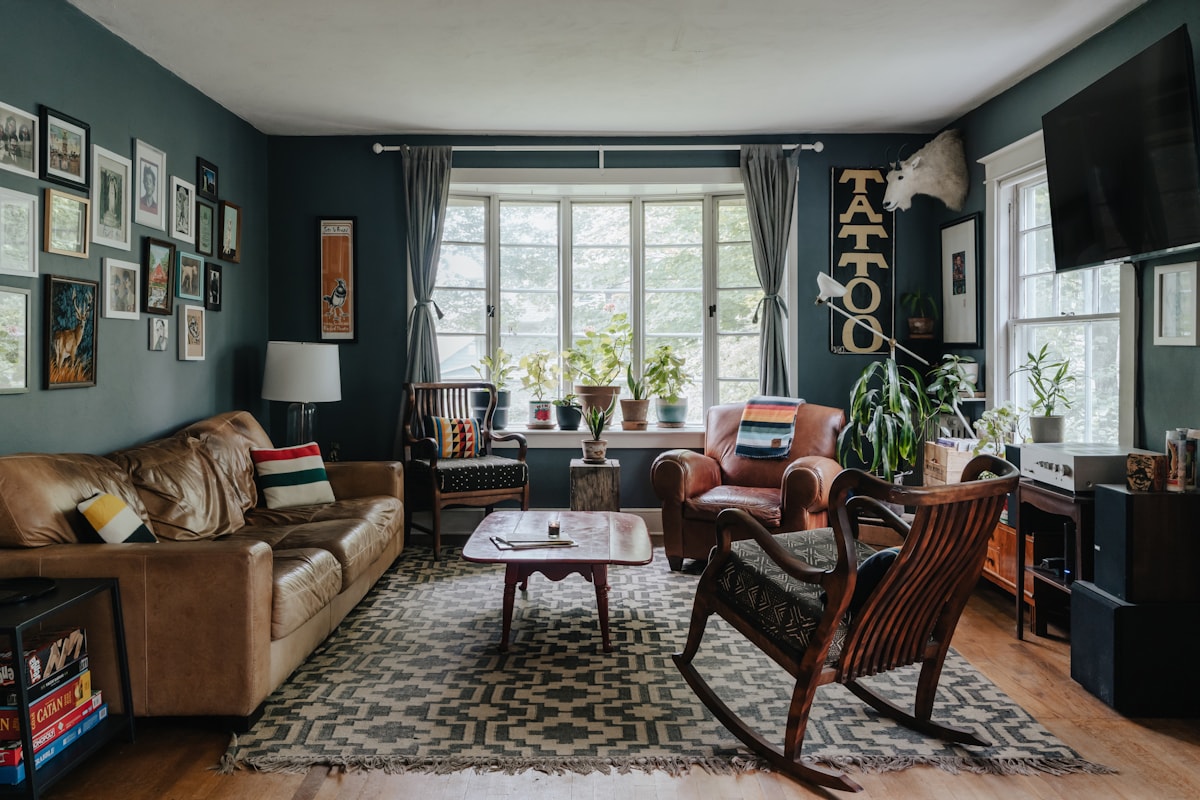
The whole thing lives in three layers. First is the shell: walls in a smoky forest green or a dusty plum, ceiling kept a half-shade lighter so the room does not press down on you. Second is soft goods. Heavyweight linen curtains. A quilt with the kind of pattern that already looks faded even when new. Two or three cushions in clashing botanicals that feel found rather than bought. Third is the small stuff, and it matters more than people expect. A chipped enamel jug. A short stack of cloth-bound books with the spines facing out. A bowl of acorns gathered from a walk you actually took last week. None of it should feel posed. You want the eye to move from one quiet detail to the next, the way it would in any old country house on a wet afternoon. Lighting stays low and warm, ideally from two or three sources rather than one bright ceiling fitting. The point is not gloom for its own sake. The point is the warmth of an old house in winter.
How it differs from neighboring aesthetics
People confuse this look with light cottagecore, dark academia, and traditional gothic, and the differences matter once you start buying paint. Light cottagecore lives in cream, butter, and faded rose. It wants morning sun on a windowsill of jam jars, and a tabby cat asleep on a quilt. This approach keeps the same furniture vocabulary but pulls the saturation down and the contrast up, so the space reads as warm rather than cheerful. You still see the spindle chair and the wonky hand-thrown pottery. They just sit in a dimmer, moodier light, against a wall that absorbs sound instead of bouncing it back at you. The aesthetic is not the opposite of the bright version; it is the same room at a later hour.
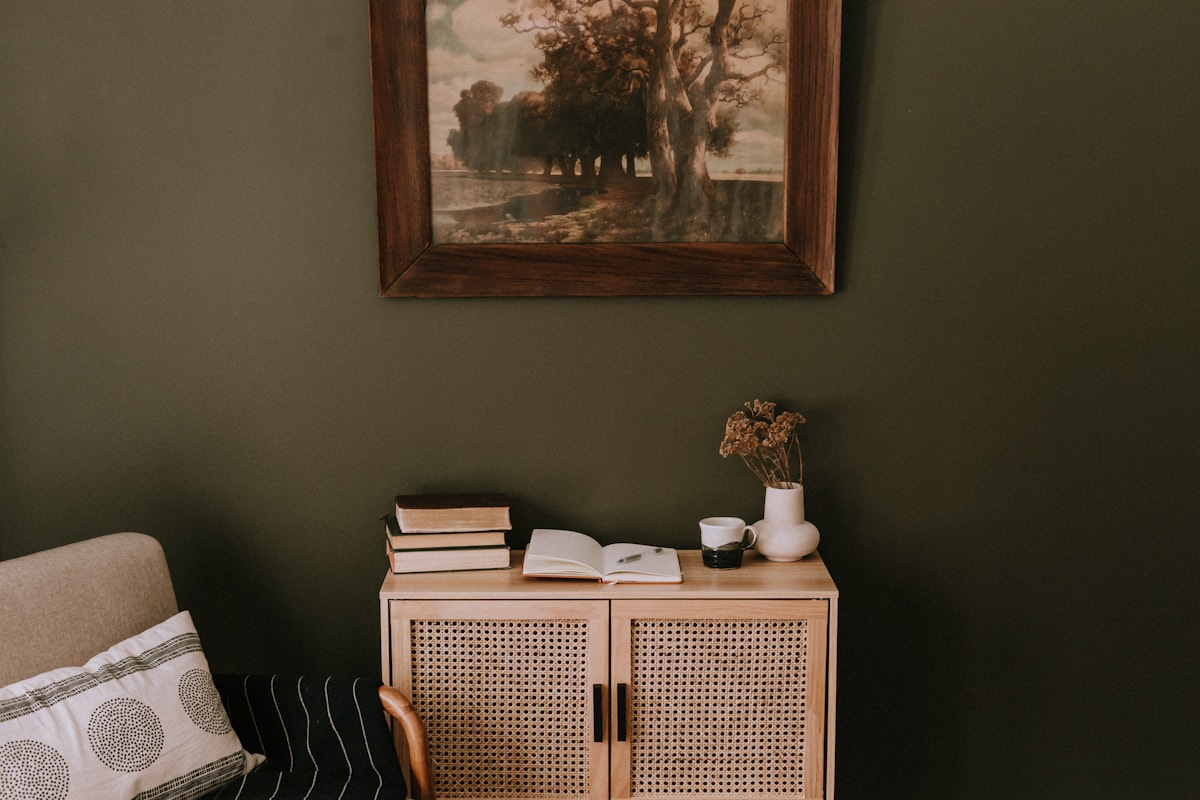
Dark academia, by comparison, leans urban, scholarly, and a little starched: tufted leather, brass desk lamps, Latin spines lined up by height, oxblood and tobacco brown. The countryside cousin trades the lecture hall for a hedgerow, so you swap leather for unbleached linen, brass for blackened iron, and shelves of theory for a basket of dried yarrow and a half-used candle. Traditional gothic, meanwhile, goes for drama on purpose: heavy carving, pointed arches, deep flat black, ecclesiastical reds, the whole vocabulary of a cold cathedral. The version we are after is softer than that, by a good margin. The blacks are usually warm and a little green. The patterns are botanical, never heraldic. Nothing in the room should look like it came from a chapel; it should look like it came from a garden in November, just after the first frost, when everything has gone bronze and quiet.
Working the look into a real space
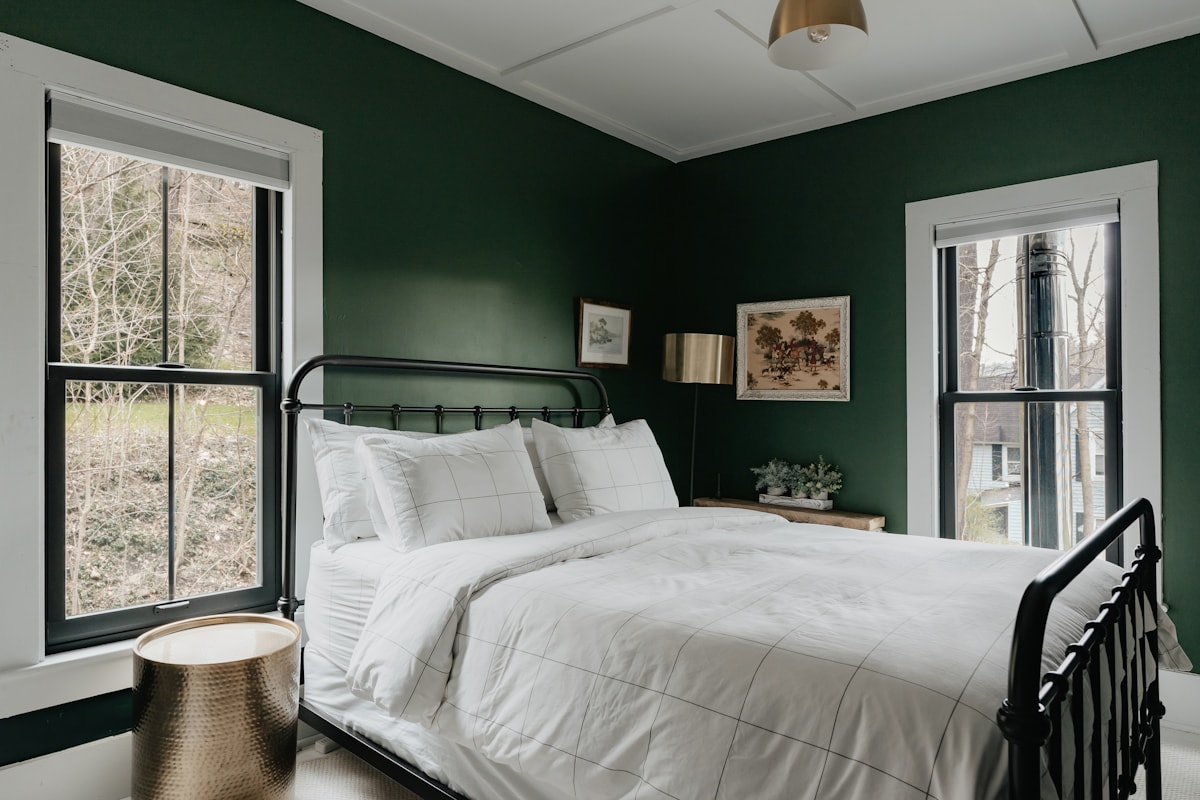
Start with the walls, because they set the floor for everything else. A single moody color, taken right up over any picture rails and across the woodwork, will do more than any piece of new furniture. Match it with curtains in roughly the same value, so the windows feel like part of the wall when drawn. Keep the floor honest. Bare boards, a soft rug with some age to it, or a sisal mat in a warm brown all work; a high-gloss new floor will fight you. From there, edit what you already own before buying anything. A pale pine dresser can stay if you let it patina. A glossy white side table probably has to go, or get repainted in something deep. Layer textiles in threes: a wool throw on the chair back, a quilted cushion, a length of dyed linen folded over the arm. Bring in living things, dried bunches in a stoneware jug, a single trailing ivy on a high shelf, an apple or two on the mantel beside a stub of candle. Hang one piece of art on a long wall, something old or hand-cut, never a glossy print. Tuck a low stool near the bed, and a small basket of mending or a half-finished book under the window. After dark, light the space with two table lamps and a candle, never the overhead. By the second evening, you will already prefer it.
Done well, the finished result is quiet, warm, and a little secretive, the kind of space you want to sit in with a book and a cup of something hot. Resist the urge to add one more thing once it looks finished. The look depends on restraint, on a few well-chosen objects breathing in low light, on textures you can feel from across the floor. Let the room stay slightly empty. That gentle emptiness is what keeps the whole thing from tipping over into costume.