
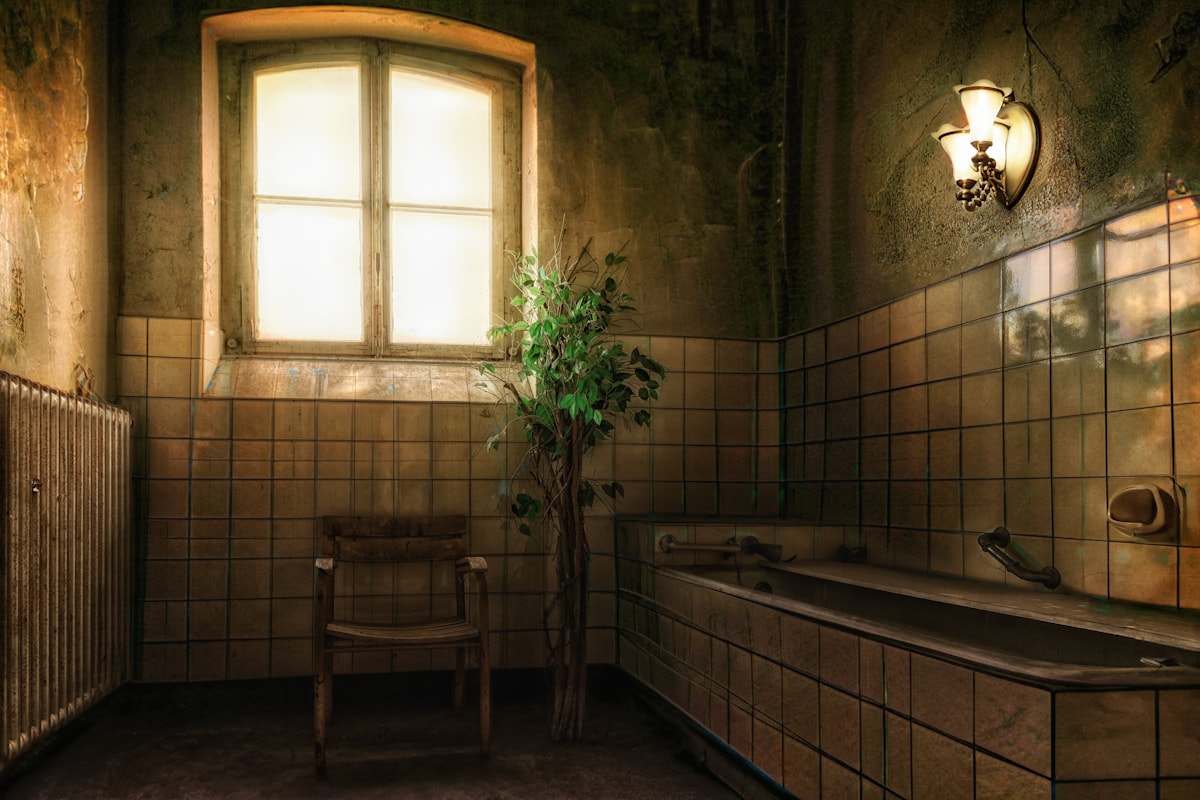
Most dark cottagecore bathroom ideas start with one quiet decision: warm the shadows instead of fighting them. The look builds on the broader dark cottagecore interior design language, then translates it into tile, timber, and steam.
What This Moody Aesthetic Actually Means
This style reads as a moody take on the rural farmhouse vocabulary. Picture a cast-iron soaker, oil-rubbed taps, and walls the color of wet bark. The boards underfoot read like a worn cellar, not a showroom. Light arrives in pools from sconces with linen shades or pinched candle bulbs, not a flat ceiling wash. Materials feel hand-finished. Brass tarnishes on purpose. Wood is sealed but never glossy. The mood is part herbal apothecary, part rainy weekend morning, very little spa. Think dried bunches of lavender tucked above the door, a chipped stoneware pitcher used as a vase, and a small mirror that throws candlelight onto the back wall when you turn off the overhead.
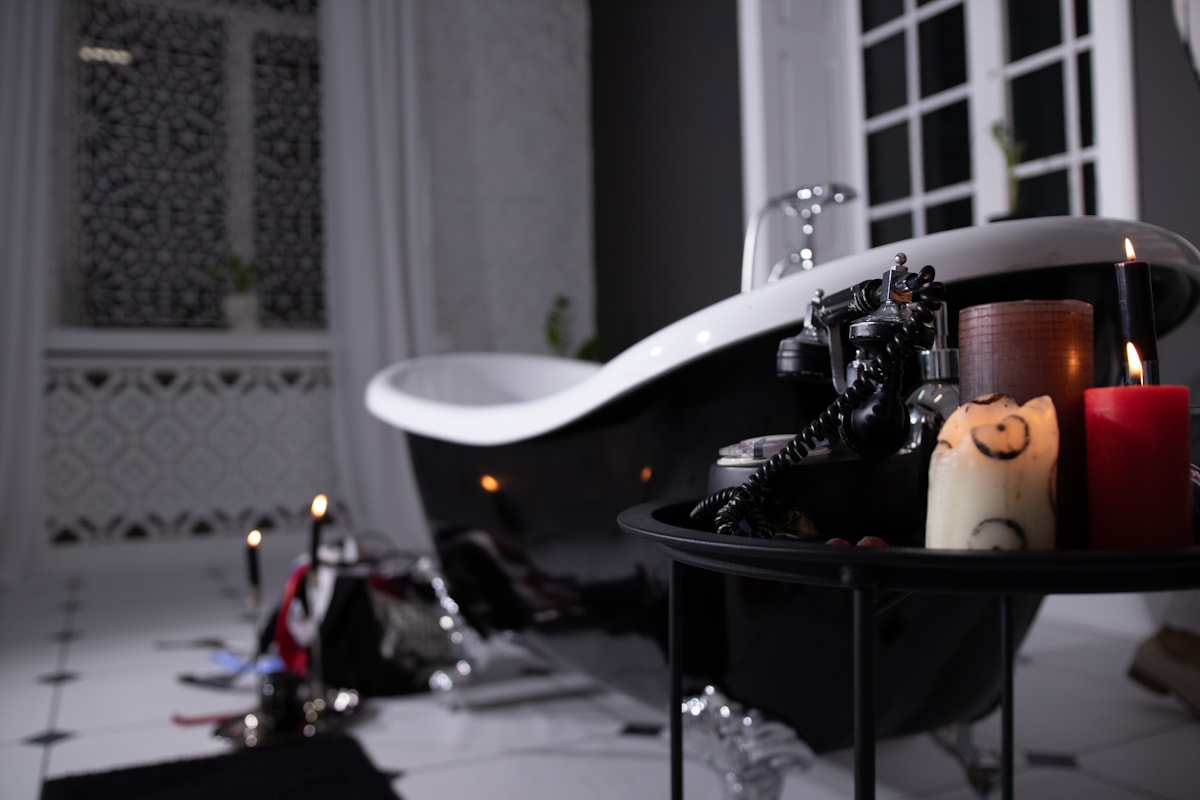
You can tell the look lands when the room still feels usable on a foggy weekday. Function carries weight here. A deep ledge for hand-thrown soap dishes. Hooks along the back of the door for heavy robes. A wide basin set into salvaged oak with a faint coffee ring you choose not to sand out. The window dressing leans toward unbleached linen, gathered, never stiff. Curtains skim the sill and ripple when the radiator clicks on. Storage hides behind small cupboards with iron latches, not sleek push-to-open drawers. The wider story tying it together is restraint, applied to a palette that already runs deep. Pick three textures, three tones, then stop adding things. Anything more starts to read as a stage set rather than a real room you wash your face in every morning before sunrise. The trick is to keep one element rough for every element refined, so the eye keeps moving instead of locking onto a single hero piece you secretly resent by month three.
How The Look Differs From Adjacent Styles
Compared to a bright cottage bath, this style trades whitewash for ink. Where a sunlit cottage room would lean into chalky walls and faded floral, the aesthetic holds onto the same floral motif but recolors it: bruised plum, mossy black, slate gray with one warm rust note. The shapes stay the same. Slipper soaker, beadboard wainscot, painted plank ceiling. Only the values shift down. Set that against a gothic bath and you see a different split. Gothic rooms court drama through pointed arches, mirror frames carved like cathedral spires, and rich velvet. The look sidesteps that theatre. The reference points are a kitchen garden in November, a tack room with the door propped open, and the smell of wax on warm wood, not a chapel at midnight.
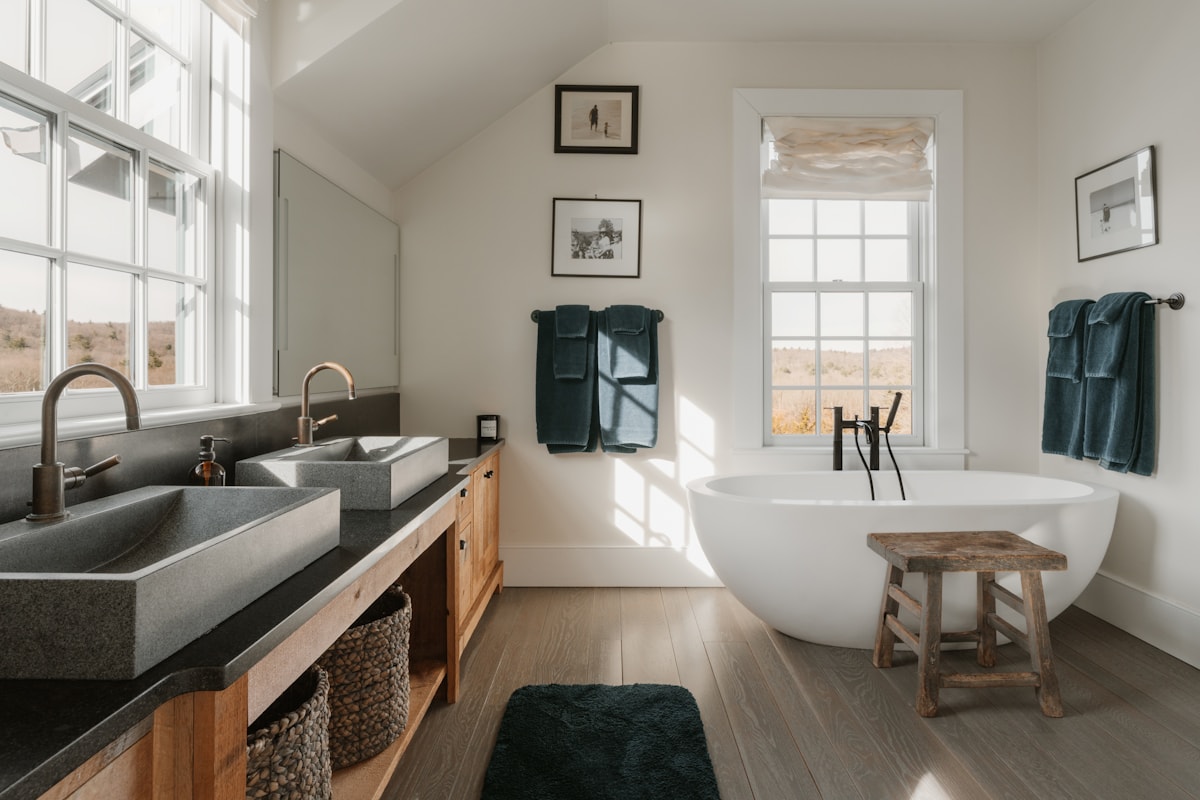
A spa bath, by contrast, polishes everything. Slab stone, frameless glass, recessed downlights on dimmers. The room reads expensive because the surfaces look untouched. The aesthetic pulls the opposite way. Surfaces show use. Grout sits a deeper tone so it never looks dirty after a year. The mirror is foxed or hand-cut, not flush-mounted. Even the towel bar is forged steel, hammered along the shaft. A modern farmhouse bath sits in the middle. It borrows the shaker doors and the apron sink but keeps the room bright. Our version pushes past it, dimming the room until candles feel necessary, not decorative. That single dimming move is what separates this style from every adjacent moodboard. Once the values drop, the small handmade flaws everywhere else start to read as care rather than oversight, which is the whole point.
Applying The Style Room By Room
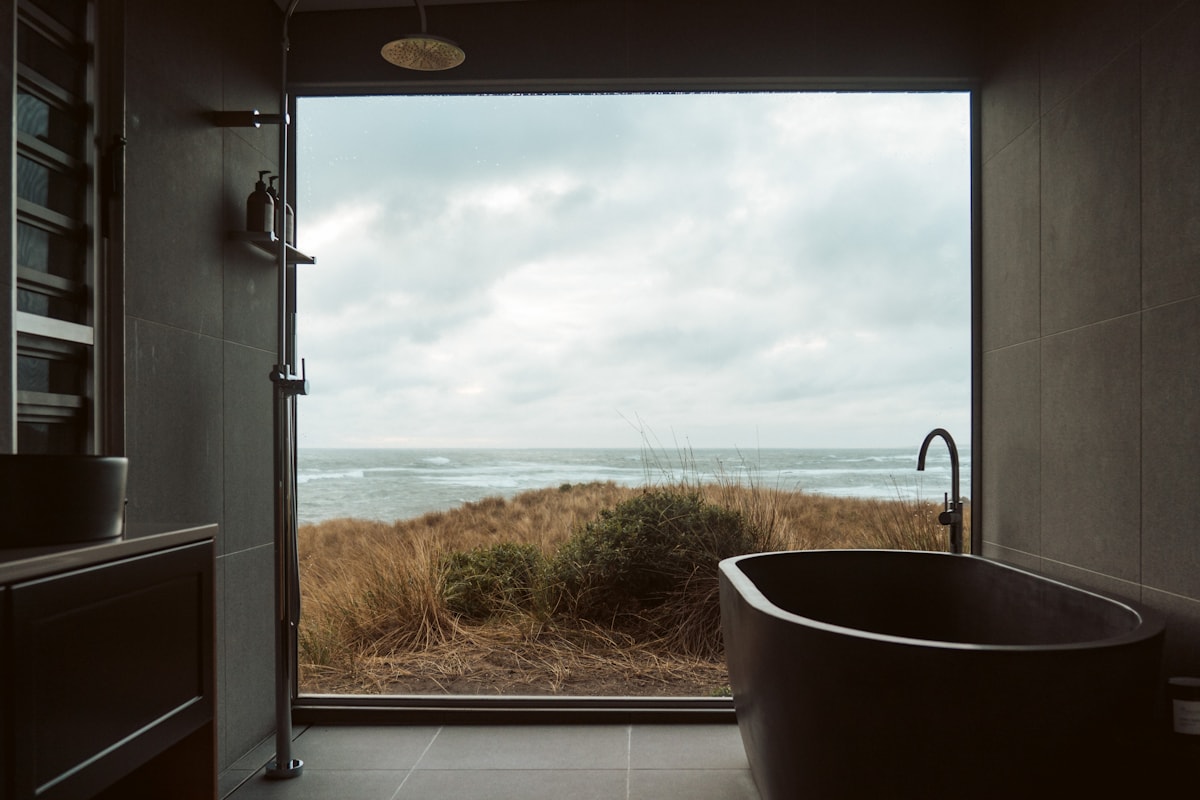
Start with the envelope. Paint the ceiling the same deep shade as the walls so the room reads like a hollowed log, then carry that color onto the trim. Tile only the wet zone behind the soaker and around the shower in small handmade squares with visible chatter at the edges. Boards run wide-plank, oiled, sealed against splashes but never sprayed with gloss. For the vanity, pull pieces straight from a working pantry: a reclaimed dresser with the original pulls, a stone or zinc top, an undermount basin in unlacquered brass. Plumbing runs exposed where it can, copper or aged nickel, tied to the wall with leather straps when the pipe is visible above the boards. Lighting carries the rest. Two wall sconces flanking the mirror at face height, a single pendant low over the soaker, no recessed cans. Bulbs stay warm, around 2400 kelvin, on a real switch you can hear click. Soft goods come last. Stack three folded waffle-weave bath sheets on an open shelf. Drape a pressed-flower print, framed in stained oak, above the radiator. Replace the tank lid with a slab of dark limestone if your toilet allows it. Skip the rubber pad in favor of a small kilim runner you can wash by hand. These small calls are where the look earns the room.
Live with the room a season before adding anything else. A bunched bundle of dried yarrow hung from a hook. A chipped enamel cup holding pulled teeth of garlic when nothing else fits. The point of this kind of space is never the moodboard. It is a room you keep returning to because the morning light, the warm dim of the sconce, and the soft wear of the surfaces all argue gently for staying a little longer before the day asks anything.